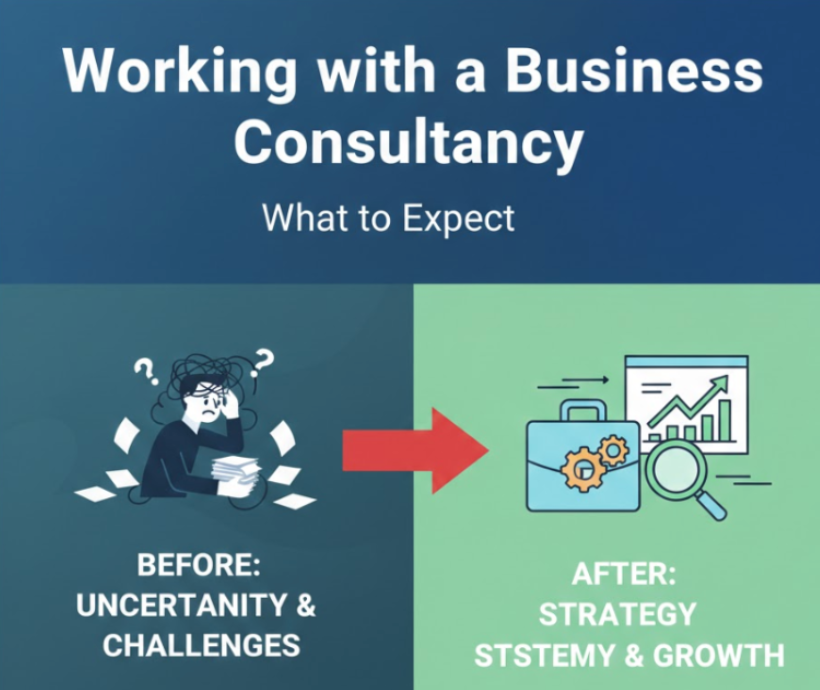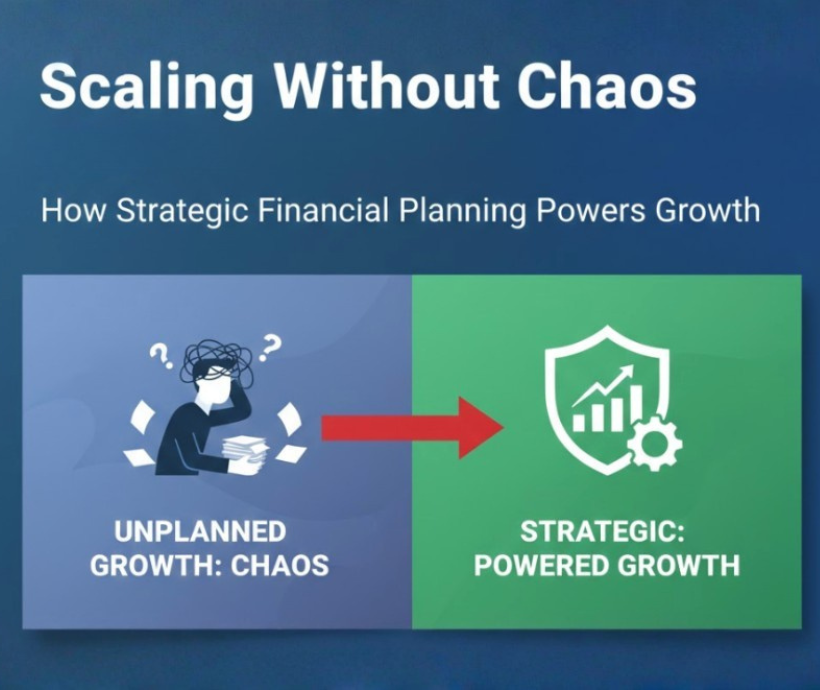
For most entrepreneurs, the early days of a business are defined by wearing multiple hats. You are the CEO, the salesperson, the HR manager, and often by necessity the bookkeeper. You manage the spreadsheets, chase the odd invoice, and hope that your VAT calculations are correct.
However, as a business scales, the “DIY” approach to finance becomes a significant bottleneck. There comes a point where the complexity of your financial operations outpaces your capacity to manage them. This is where the concept of an Outsourced Finance Team comes into play.
But when exactly does it make sense to stop managing it yourself or move away from a part-time bookkeeper? Let’s explore the signs that your business is ready for a professional, outsourced solution.
The Shift from Compliance to Strategy
Initially, accounting is about compliance: making sure HMRC is happy and your taxes are paid. But as you grow, you need more than just “backward-looking” data. You need “forward-looking” insights.
An outsourced finance team provides a tiered level of expertise that most small to medium-sized businesses (SMEs) cannot afford to hire full-time. This usually includes:
- Bookkeepers for daily transactions and reconciliations.
- Financial Controllers to ensure accuracy and manage cash flow.
- Fractional CFOs (Chief Financial Officers) to provide high-level strategy, fundraising support, and long-term planning.
When Does Outsourcing Make Sense?
1. When You Are “Flying Blind”
If you cannot tell, with 100% certainty, your exact profit margins for last month or your projected cash position for the next 90 days, you are flying blind. An outsourced team implements robust reporting frameworks, giving you monthly management accounts that actually mean something. If you are making decisions based on “gut feeling” rather than data, it is time to outsource.
2. When Growth is Stagnating Due to Admin
A CEO’s time is best spent on strategy, product development, and sales. If you are spending five to ten hours a week wrestling with payroll, pension contributions, or complex VAT schemes (like the Flat Rate or Margin Scheme), you are losing thousands of pounds in “opportunity cost.” Outsourcing returns that time to you, allowing you to focus on revenue-generating activities.
3. When You Hit “The Middle Ground”
There is a difficult stage in business growth where you are too large for a basic bookkeeper but too small to justify the £80,000+ salary of a full-time, high-calibre Finance Director. Outsourcing allows you to access that high-level expertise on a “fractional” basis meaning you only pay for the silver of time you actually need.
Experience the Power of a Professional Finance Function
At Bewise Consultancy Ltd we act as your dedicated, off-site finance department. We don’t just “do the books” we provide the clarity you need to scale with confidence. Our team offers everything from comprehensive accounting and tax compliance to strategic business advice, ensuring your financial foundation is rock solid.
Stop managing your finances in the margins of your day. Visit Bewise Consultancy Ltd to discover how our outsourced finance solutions can accelerate your growth.
The Benefits of an Outsourced Model
Access to the Latest Technology
Modern finance teams use a “tech stack” that includes AI-driven expense management, automated cloud accounting (like Xero), and sophisticated forecasting tools. Setting these up yourself is time-consuming and expensive. An outsourced partner brings this infrastructure with them, giving you enterprise-level tools from day one.
Continuity and Reduced Risk
In-house teams come with “key person risk.” If your lone bookkeeper leaves or goes on sick leave, your finance function grinds to a halt. An outsourced firm provides a team-based approach, ensuring that your payroll is always run and your deadlines are always met, regardless of individual absences.
Specialist Knowledge on Demand
Business growth often brings complex challenges perhaps you are considering an R&D tax credit claim, navigating an acquisition, or expanding into international markets. An outsourced firm typically has specialists in various fields, giving you access to expert tax or legal advice that a generalist in-house accountant might not possess.
The Cost-Benefit Analysis
While outsourcing carries a monthly fee, it is almost always more cost-effective than hiring. When you hire in-house, you aren’t just paying a salary; you are paying for National Insurance, pensions, office space, software licenses, and training.
With an outsourced team, you get a scalable service. As your business grows, the team can take on more responsibility. If you hit a quiet period, the service can often be adjusted. It is a flexible, “elastic” solution that fits the volatile nature of growing a business.
Conclusion: Investing in Clarity
Outsourcing your finance function is not an admission that you can’t handle the work; it is a strategic decision to ensure the work is handled with professional precision. It transforms finance from a “necessary evil” into a competitive advantage.
When you have a team of experts watching your cash flow, ensuring your compliance, and advising on your strategy, you gain a level of mental clarity that is essential for leadership. If you want to build a world-class company, you need a world-class finance function to support it.